Indiana Lake Depths
NESW

Bass Lake

Starke County, Indiana · IN DNR bathymetric survey
26ft Max
depth
1,428 acres 5 contours Public access
Paddling Index30Modest
Get directions

Depth scale

The lake

Survey readout

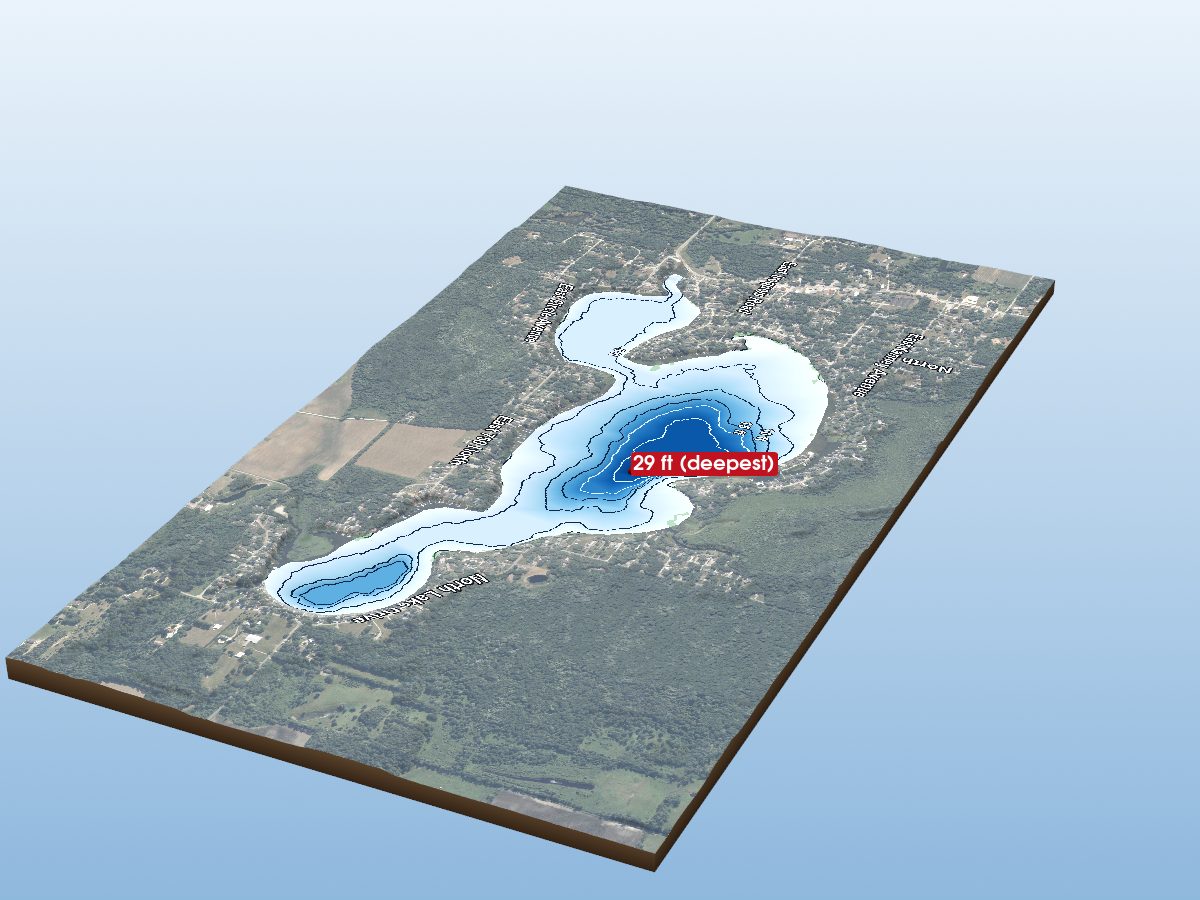
Bass Lake is mapped to a depth of 26 ft on the Indiana DNR survey and covers about 1,428 acres in Starke County, Indiana. Depths come from the Indiana DNR survey of 2024.

Measured from the Indiana DNR lake bathymetry survey.

Deepest mapped contour
26 ft
Survey year
2024
Surface area
1,428 acres
Shoreline
8.31 mi · irregular
Aquatic vegetation
0% of surface · NDVI estimate
Public access
Boat Ramp · Indiana DNR site
Additional depth details5 contours
Contour depths
0–26 ft
Recorded point soundings
26 ft
Compare with another lake
Location
Koontz LakeBass Lake (this lake)
Starke County, Indiana · all 2 lakes · tap a dot for that lake
Chart data

Provenance

Sources: IN DNR Lake Bathymetry, USGS 3DEP, USDA NAIP (public domain), OpenStreetMap (ODbL).

⚠ Not for navigation

Spot an error? Send a correction

Map details & sources4 sources

All layers registered to one bounding box; positions in WGS 84.

Survey-derived depth contours drape over USGS 3DEP elevation, with a USDA NAIP aerial basemap and OpenStreetMap shoreline. Color shows surveyed depth; dark lines are the survey's own isobaths.

Coordinates
41.22459, -86.58871
IN DNR lake ID
123167529
Vertical exaggeration
2.8×
Basemap
USDA NAIP · public domain
Model size
2.0 MB

Paddling

Paddling Index methodology v1.0 · calculated 2026-10-08
30 / 100ModestData confidence: High

Bass Lake has a substantially developed setting, notable open-water exposure, nearby higher-volume roads. No special watercraft restriction is identified in the current source.

Why this score?5 components

Included in the index

ComponentRatingPoints of weightMeasurement
Natural settingModest0.6 of 3033% natural land cover within 150 m of shore (15% forest, 11% wetland; 54% developed)
Geometric wind exposureMixed5.2 of 25mean fetch 2,740 m · 0% of sampled water within 500 m of shelter · long fetch in some directions
Watercraft controlsNone identified7.5 of 15No special watercraft restriction identified in the current DNR source. Motors permitted, subject to general law.
Public accessGood12.8 of 151 DNR fishing access site · boat ramp · ADA-accessible
Road isolationMixed3.8 of 15nearby higher-volume roads · 16 INDOT-classified segments within 1.2 km, peak 7,176 vehicles/day

Additional paddling considerations

These describe the lake but are not part of the v1 Paddling Index and do not change the number above.

Wake sensitivity
Low — wide enough that wakes disperse over most of the lake
Aquatic vegetation
Low — approximately 0% mapped coverage · NAIP aerial imagery (NDVI)
Observed motorized activity
Unknown — No lake-level measurement of boat traffic is available. Legal permission to operate motors is not evidence of use.
Wildlife habitat potential
Limited — 15% forest and 11% wetland cover within 150 m of shore
How this index is calculated. The Paddling Index is a relative composite derived from lake geometry and public environmental, access, roadway and watercraft-control data. It is not a user review, a safety rating, or a prediction of an individual outing. Differences of a few points should not be treated as meaningful — an 84 and an 82 are broadly comparable. Components and weights: natural setting 30%, geometric wind exposure 25%, watercraft controls 15%, public access 15%, road isolation 15%; observed motorboat activity is weighted 0% because no defensible lake-level measurement exists. Where a component has no data the remaining weights are renormalized and the confidence rating is lowered; below Medium confidence no number is shown. Sources: USGS NHD waterbody outline, USGS/MRLC NLCD Land Cover (2021), IN DNR Fishing Access Sites (motor restrictions) (2026-08), IN DNR Fishing Access Sites (2026-08) and INDOT Annual Average Daily Traffic (2021). Conditions change quickly — check current weather and local conditions before going out.

Fish you might catch

from DNR surveys

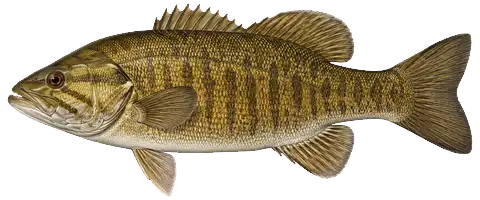
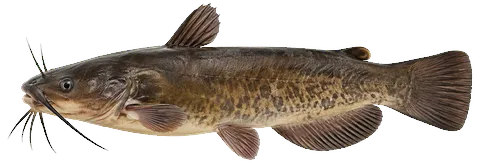
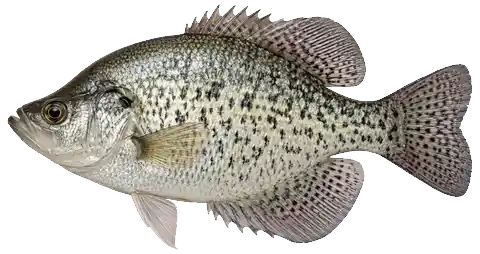
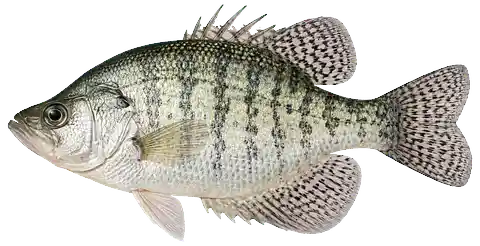
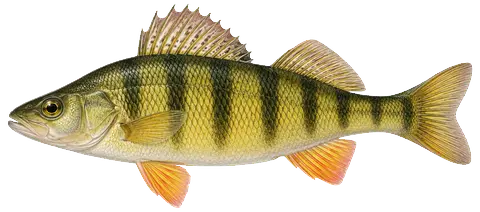
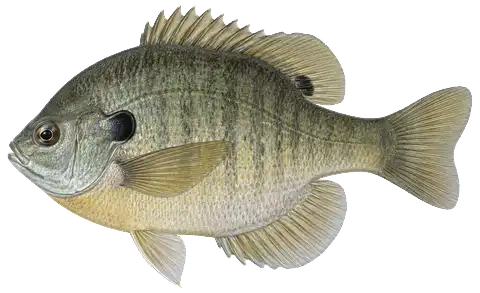
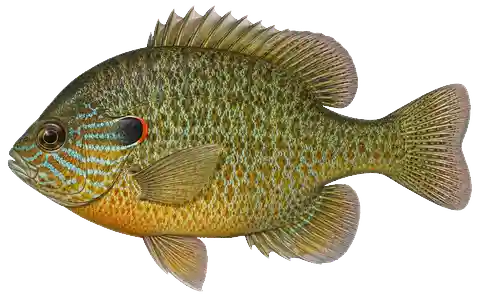
20 species with recent evidence in this lake — sized relative to each other. Illustrations are AI-generated representative adults in everyday colors, not photographs (provenance).
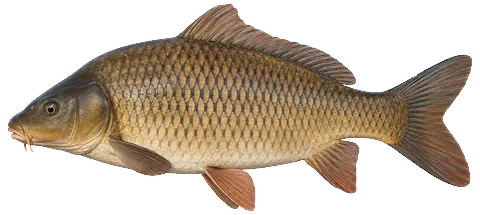
Common Carp
Bigmouth Buffalo
Quillback
Gizzard Shad
White Bass
Brook Silverside
Bluntnose Minnow
Emerald Shiner
Spotfin Shiner

Fishing rules for this lake Beta

Size and daily limits for the 20 species found here — 17 open to harvest, 1 with a special rule or closed season.

These are hook-and-line size and daily limit rules. The fishing code sets no closed season for these species on inland lakes, but posted property rules can close a water — see the notes. Gear, spearing and bow fishing, netting and bait collection are set by other sections of 312 IAC 9 and are not shown here.

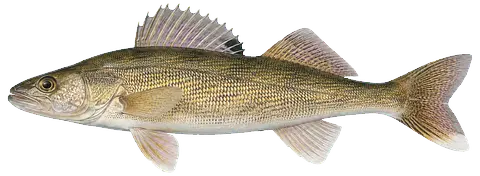
WalleyeSpecial rulesWalleye here at least 14 inches (312 IAC 9-7-12(c)) — the exception to the 16-inch rule north of State Road 26; 6 per day in any combination with sauger and saugeye.
Bigmouth BuffaloOpen to harvestMinimum size: no size limit · Daily limit: no limit (312 IAC 9-7-14(d) · “Buffalo”)
Beta. This panel is newly published. Every value is transcribed from the Indiana Administrative Code (312 IAC 9-7) and checked against the Indiana DNR's 2026-27 Fishing Regulations Guide, but the coverage and wording are still under review. If anything here disagrees with 312 IAC 9-7 or the Indiana DNR's guide, the DNR is right — the Administrative Code is the legal text; the guide summarizes it.
No closed season in the fishing code: 312 IAC 9-7 sets no season for these species on inland lakes (trout and salmon “at any time of year”, 9-7-13(d)(1)). Posted property rules can still close a water or bar entry (312 IAC 8-2-1) and 312 IAC 9-6-6 closes a few named areas, so check the property before you go. The possession limit is twice the daily bag limit (312 IAC 9-1-12.1); fish already processed and stored at your primary residence do not count toward it (312 IAC 9-2-8(d)).
Bigmouth BuffaloOpen to harvestMinimum size: no size limit · Daily limit: no limit (312 IAC 9-7-14(d) · “Buffalo”)
Black CrappieOpen to harvestMinimum size: no size limit · Daily limit: 25 (312 IAC 9-7-14(a)) Black and white crappie together.
BluegillOpen to harvestMinimum size: no size limit · Daily limit: no limit (312 IAC 9-7-14(d) · “Bluegill”)
Bluntnose MinnowOpen to harvestMinimum size: no size limit · Daily limit: none stated (312 IAC 9-7-15) A minnow under the code’s definition (312 IAC 9-6-1). Minnows may be taken at any time of year by minnow trap, dip net, seine, cast net or lawful sport-fishing methods; the section states no bag or size limit, caps transport out of Indiana at 100 minnows in any 24-hour period (licensed bait dealers, scientific-purposes licensees and those commercially raising minnows in private waters for sale excepted), and requires a bait dealer’s license to sell (312 IAC 9-7-15).
Brook SilversideRule not confidently resolvedNot named in 312 IAC 9-7 or in the DNR guide's limits table. Please check with the Indiana DNR (317-232-4200) before keeping this species.
Brown BullheadOpen to harvestMinimum size: no size limit · Daily limit: no limit (312 IAC 9-7-14(d) · “Bullhead”)
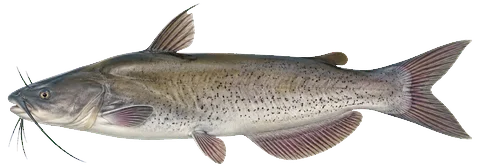
Channel CatfishOpen to harvestMinimum size: no size limit · Daily limit: 10 (312 IAC 9-7-3(b), (d)) The 10 is catfish in aggregate of any size from a lake or reservoir. Of those, not more than one channel catfish 28 inches or longer, one blue catfish 35 inches or longer and one flathead catfish 35 inches or longer per day.
Common CarpOpen to harvestMinimum size: no size limit · Daily limit: no limit (312 IAC 9-7-14(d) · “Carp”)
Emerald ShinerOpen to harvestMinimum size: no size limit · Daily limit: none stated (312 IAC 9-7-15) A minnow under the code’s definition (312 IAC 9-6-1). Minnows may be taken at any time of year by minnow trap, dip net, seine, cast net or lawful sport-fishing methods; the section states no bag or size limit, caps transport out of Indiana at 100 minnows in any 24-hour period (licensed bait dealers, scientific-purposes licensees and those commercially raising minnows in private waters for sale excepted), and requires a bait dealer’s license to sell (312 IAC 9-7-15).
Gizzard ShadOpen to harvestMinimum size: no size limit · Daily limit: no limit (312 IAC 9-7-14(d) · “Gizzard shad”) No limit on harvest, but live shad may not be kept: live gizzard or threadfin shad may be possessed or used as bait only on eight named waters (Brookville, Cecil M. Harden, Monroe and Patoka reservoirs, Lakes Freeman and Shafer, Hardy Lake, the Ohio River main stem excluding its embayments), and only where collected. Everywhere else shad must be killed immediately (312 IAC 9-6-8(b)–(d)).
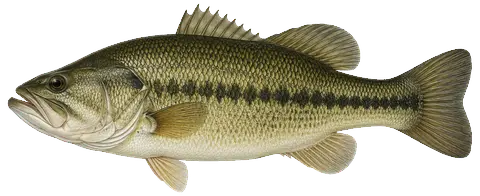
Largemouth BassOpen to harvestMinimum size: 14" · Daily limit: 5 (312 IAC 9-7-6(a), (c)(3)) The 5 is black bass in aggregate — any combination of largemouth, smallmouth and spotted bass — not 5 of each.
PumpkinseedRule not confidently resolvedNot named in 312 IAC 9-7 or in the DNR guide's limits table. Please check with the Indiana DNR (317-232-4200) before keeping this species.
QuillbackOpen to harvestMinimum size: no size limit · Daily limit: no limit (312 IAC 9-7-14(d) · “Sucker”) Greater redhorse is endangered in Indiana (312 IAC 9-6-9) and may not be taken — identify redhorse carefully.
Smallmouth BassOpen to harvestMinimum size: 14" · Daily limit: 5 (312 IAC 9-7-6(a), (c)(3)) The 5 is black bass in aggregate — any combination of largemouth, smallmouth and spotted bass — not 5 of each.
Spotfin ShinerOpen to harvestMinimum size: no size limit · Daily limit: none stated (312 IAC 9-7-15) A minnow under the code’s definition (312 IAC 9-6-1). Minnows may be taken at any time of year by minnow trap, dip net, seine, cast net or lawful sport-fishing methods; the section states no bag or size limit, caps transport out of Indiana at 100 minnows in any 24-hour period (licensed bait dealers, scientific-purposes licensees and those commercially raising minnows in private waters for sale excepted), and requires a bait dealer’s license to sell (312 IAC 9-7-15).
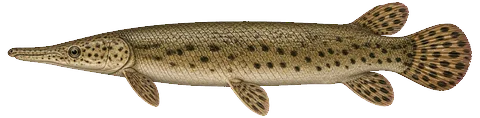
Spotted GarOpen to harvestMinimum size: no size limit · Daily limit: no limit (312 IAC 9-7-14(d) · “Gar”)
WalleyeSpecial rulesWalleye here at least 14 inches (312 IAC 9-7-12(c)) — the exception to the 16-inch rule north of State Road 26; 6 per day in any combination with sauger and saugeye.
White BassOpen to harvestMinimum size: no size limit · Daily limit: 12 (312 IAC 9-7-7) 12 in any combination of white bass and hybrid striped bass, of which not more than two may exceed 17 inches.
White CrappieOpen to harvestMinimum size: no size limit · Daily limit: 25 (312 IAC 9-7-14(a)) Black and white crappie together.
Yellow PerchOpen to harvestMinimum size: no size limit · Daily limit: no limit (IN DNR 2026-27 guide, statewide table · 312 IAC 9-7-18 (Lake Michigan only)) The code limits yellow perch only on Lake Michigan (15); the DNR's statewide table prints inland perch as unlimited.
Official rule text for this lake
“An individual may take minnows at any time during the year.” — 312 IAC 9-7-15(a), Indiana Administrative Code
“(2) Bass Lake in Starke County and Wolf Lake in Lake County unless it is at least fourteen (14) inches long.” — 312 IAC 9-7-12(c)(2), Indiana Administrative Code

From 312 IAC 9-7 (Sport fishing), Indiana Administrative Code (readopted 2025-03-25), and the 2026-2027 Indiana Fishing Regulations Guide · verified 2026-09-15. Regulations can change — the Indiana Administrative Code (312 IAC 9-7) is the controlling source; verify current regulations before fishing. Official regulations

Compiled from Indiana DNR fishery surveys. Silhouettes are stylized and scaled to typical adult sizes relative to one another. Presence is not a promise — fishing isn’t a sure thing.

Fishery

surveyed 2018 and 2022
1,268Fish sampled
20Species

Gamefish Channel Catfish 409 · Walleye 68 · Largemouth Bass 63 · Smallmouth Bass 1

Panfish Bluegill 282 · White Crappie 138 · Black Crappie 83

All survey species20 species

Gamefish

Channel Catfish409 caught · to 28″
Walleye68 caught · to 24″
Largemouth Bass63 caught · to 19″
Smallmouth Bass1 caught · to 9″

Panfish

Bluegill282 caught · to 7″
White Crappie138 caught · to 12″
Black Crappie83 caught · to 11″
Yellow Perch34 caught · to 9″
Pumpkinseed5 caught · to 5″

Bullhead & catfish

Brown Bullhead6 caught · to 13″

Forage & nongame

Gizzard Shad91 caught · to 19″
White Bass45 caught · to 13″
Bluntnose Minnow13 caught · to 2″
Spotfin Shiner9 caught · to 2″
Spotted Gar8 caught · to 22″
Brook Silverside5 caught · to 3″
Emerald Shiner4 caught · to 3″
Quillback2 caught · to 21″
Bigmouth Buffalo1 caught · to 22″
Common Carp1 caught · to 21″
Length is the largest fish netted in the survey, not an angler record. Source: Indiana DNR fish survey (Indiana Data Hub) (counts summed across survey years).
Quick answers

Bass Lake — common questions

How deep is Bass Lake?

The deepest contour on the Indiana DNR bathymetric survey of Bass Lake is 26 ft. That is the deepest depth the historical survey map records, which may differ from the deepest point of the lake itself.

How big is Bass Lake?

Bass Lake covers about 1,428 acres in Starke County, Indiana.

What fish are in Bass Lake?

Species with survey, catch or recent-stocking evidence include channel catfish, largemouth bass, smallmouth bass, walleye, black crappie, bluegill. The page lists all 20 species and the evidence behind each.

Is there public access to Bass Lake?

Yes. The Indiana DNR lists a public access site on Bass Lake: a boat ramp with a boat dock, restrooms and ADA access. The DNR records no fee. DNR directions: "5 miles south of Knox on US 35, then east and south a short distance on SR 10."
More lakes in Starke County