Panfish · sunfish family
Pumpkinseed
Lepomis gibbosus · also called punkys, p-seed
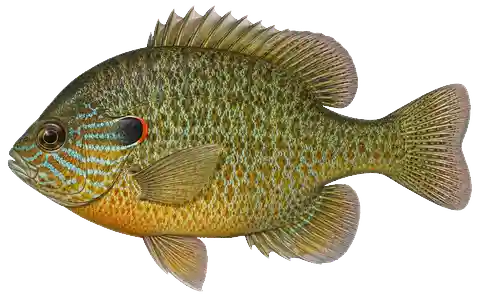
- Typical adult
- 5–8 in, under half a pound
- Spawns
- May or June, often the first sunfish to spawn
- Nests
- As shallow as 6–12 in
- Favors
- Clear, still water with dense plants
Where pumpkinseed have been recorded
39 of the 111 Indiana lakes on this site with fish records list pumpkinseed, across 14 counties. Tap a dot to open that lake’s depth map.
Recorded here Other lakes with fish records
How we know
- 39lakes where a DNR fisheries survey caught them
A lake can appear in more than one line. A lake that isn’t listed may still have them: records exist only where someone caught, netted or stocked them.
Inland lakes on this list run from 25 to 3,508 acres (median 96) and from 8 to 85 ft deep (median 43 ft).
How many turn up in DNR surveys
Indiana DNR crews survey lakes the same way everywhere: timed night electrofishing along the shore, plus gill and trap nets set overnight. The standard method makes lakes comparable. These are the DNR’s own sampling rates from its community surveys, 2008–2025 — a measure of how many fish a lake holds, not how many an angler will catch.
- Found in
- 34 of 105 lakes surveyed this way
- Typical rate
- 4.2 per hour where found
- Highest
- 57 per hour
- Method
- fish per hour of night electrofishing
“Typical” is the median across the lakes where the survey caught at least one. Nets and electrofishing catch different fish: by the other method it turned up in 23 lakes at a typical 0.50 per net lift. A single survey is a snapshot of one season.
Highest survey rates on this site
- Worster Lake, St. Joseph 2016–2024 57
- Royer Lake, LaGrange 2019 38
- Eve Lake, LaGrange 2016 32
- Rosser Park Pond, Lake County 2018 24
- Bell Lake, Steuben 2015 22
- Blue Lake, Whitley 2013 20
- Cedarville Reservoir, Allen 2017–2025 14
- Appleman Lake, LaGrange 2012 12
- Baugher Lake, Noble 2018 12
- Round Lake, Whitley 2016 12
Fish per hour of night electrofishing, with survey years. Survey effort and season differ between lakes.
Often found with
Share of these lakes that also list each fish.
How to recognize it
A red spot on the rear edge of the short ear flap, long pointed pectoral fins, blue-green streaks radiating from the mouth and eye, and a bright orange belly.
Don’t confuse it with
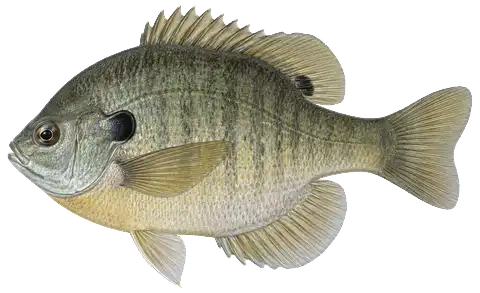
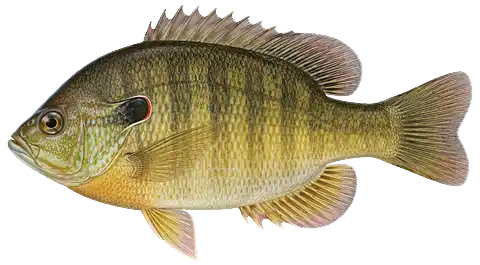
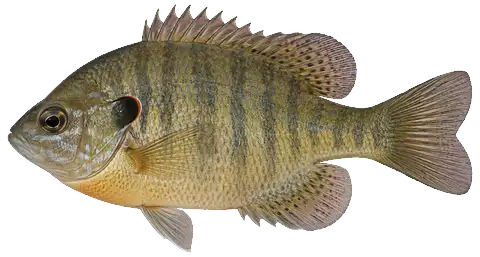
Up close
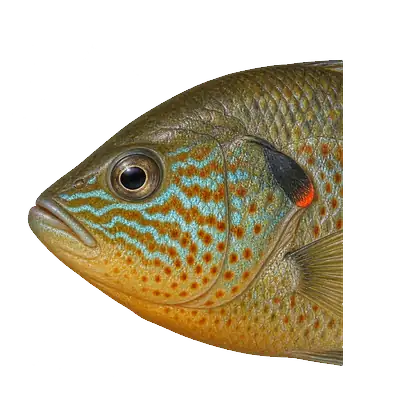
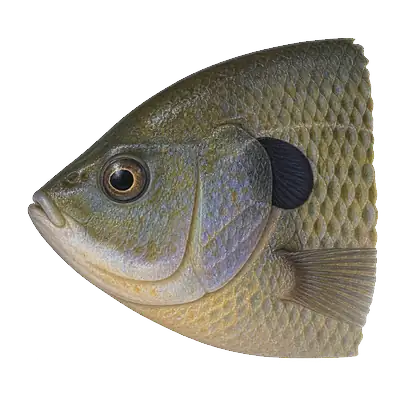
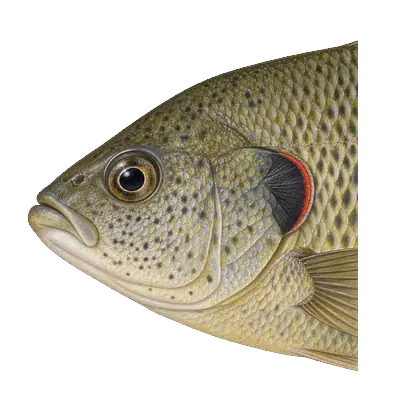
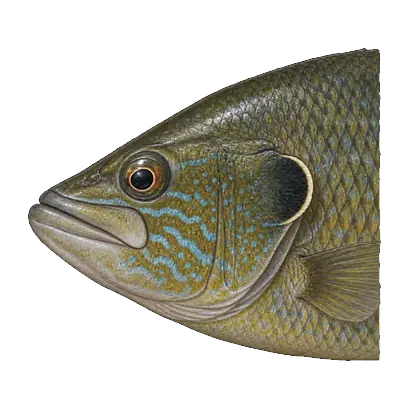
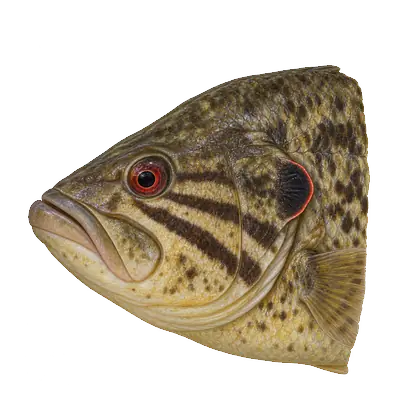
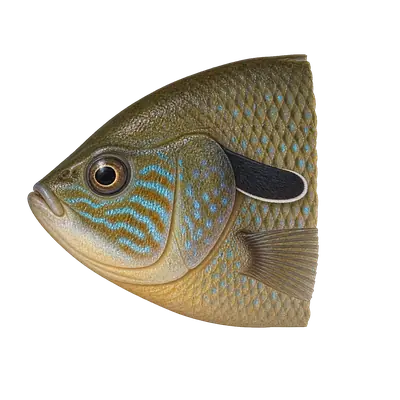
AI-generated close-ups, not photographs, drawn from the cited descriptions. They show what to look for; they are not a substitute for an expert identification (provenance).
Life in an Indiana lake
Pumpkinseed prefer clear, still water over dense submerged plants and organic bottoms, and are rare in fast streams. They eat insect larvae, snails and sometimes small fish.
Males dig nests in very shallow water in May or June and guard them until the eggs hatch; several females may use one nest.
Source: the sources below.
Rules and eating
Check the rules before you keep fish. Each lake page shows the regulations that apply there, and the Indiana Fishing Guide is the official source. Before eating fish from a particular lake, check the Indiana Fish Consumption Advisory.
All 39 lakes with pumpkinseed
Show every lake, by county
Allen County 1
DeKalb County 2
Fulton County 2
Kosciusko County 5
Hoffman Lake, James Lake, Lake Wawasee, Little Chapman Lake, Pike Lake
LaGrange County 8
Appleman Lake, Cass Lake, Eve Lake, Fish Lake, Martin Lake, Messick Lake, Pretty Lake, Royer Lake
LaPorte County 1
Lake County 1
Marshall County 3
Newton County 1
Noble County 7
Baugher Lake, Bear Lake, Bixler Lake, Diamond Lake, Little Long Lake, Lower Long Lake, Williams Lake
St. Joseph County 3
Steuben County 2
Wabash County 1
Whitley County 2
Sources
- Indiana DNR: Fishes of Indiana list (native and introduced species)
- Indiana DNR: Sunfish fishing and identification
- Ohio DNR: Pumpkinseed
- Indiana DNR fish surveys (Indiana Data Hub) — lake records and survey catch rates
- Indiana DNR record fish list (angler names are not reproduced here)