Snail
Chinese Mysterysnail
Cipangopaludina chinensis
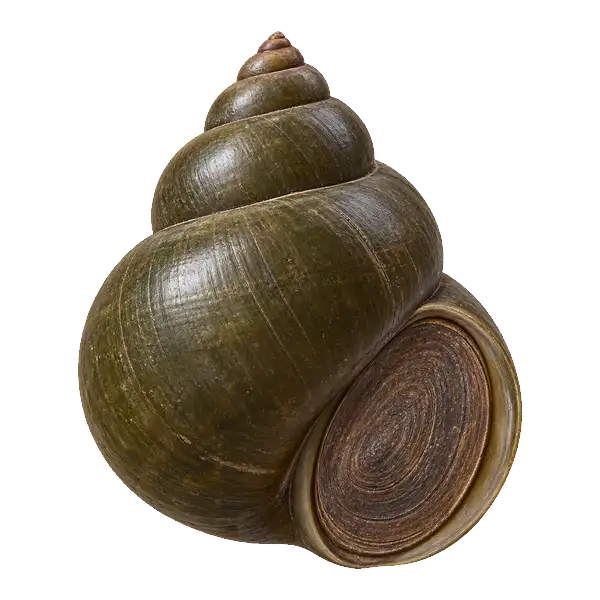
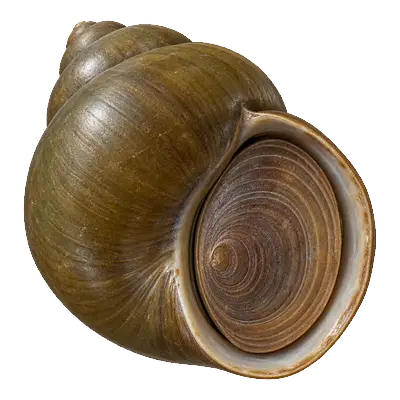
These illustrations are AI-generated, not photographs, and are not to scale. They show what to look for; they are not a substitute for an expert identification.
How to identify it
Size: Shell up to about 2.5 inches tall, about the size of a golf ball.
- A large, round, globe-shaped shell.
- A smooth olive-green to brown shell with no bands.
- A hard lid with rings like a tree stump that closes the opening.
- Often noticed when empty shells wash up on a beach.
Don’t confuse it with
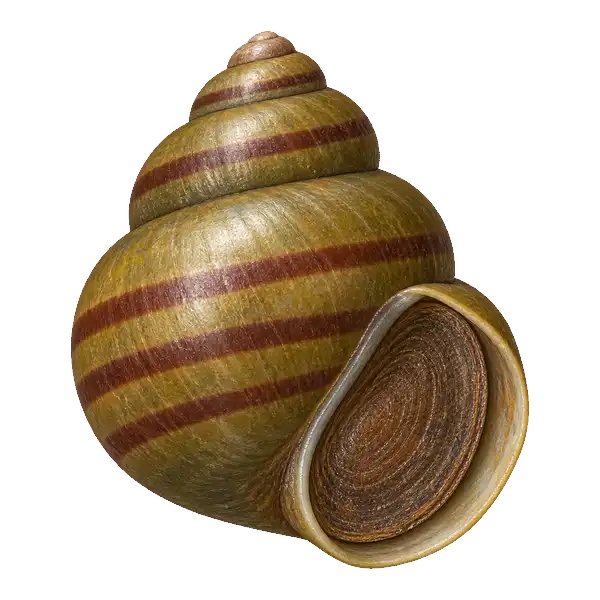
The banded mysterysnail is smaller and has reddish-brown bands. Most native lake snails in Indiana are much smaller.
Where it came from
Native to eastern Asia.
Brought to North America in the late 1800s for food markets, and later sold for aquariums and water gardens. Releases from those sources are thought to explain many populations.
Earliest dated Indiana record: 1947, the St. Joseph River at South Bend. This is the oldest dated record in the USGS non-native species database, not necessarily when it first arrived.
Why it matters
It can reach very high numbers, compete with native snails and carry parasites. Large die-offs leave piles of shells along the shore.
Indiana law
Not listed in Indiana's invasive species rules. The steps below still help keep it from spreading. Indiana DNR lists it among the aquatic invasive species it asks people not to spread.
If you find it
- Don’t move it. Before leaving the water, remove all plants, mud and debris and drain all water from your boat, motor, live well, bilge and trailer. Carrying plants listed in Indiana’s Aquatic Plant Rule on vehicles, boats or trailers is illegal and can bring fines. Clean boater tips
- Never release bait or pets. Don’t dump bait, aquarium animals or water-garden plants into any lake or stream. Put unused bait in the trash.
- Report it. Take a photo, note where you saw it, and report it through EDDMapS or the GLEDN phone app, or contact Indiana DNR’s aquatic invasive species program at 317-234-3883 or ais@dnr.IN.gov. Experts there can confirm what you found.
- Ask before removing or treating. On public lakes, any control of aquatic plants — chemical, mechanical, physical or biological — needs an Indiana DNR aquatic vegetation control permit. When a permit is needed
Indiana lakes where it has been recorded
3 Indiana lakes on this site have a record of this species.
Kosciusko
A lake that is not listed may still have it. Records exist only where someone found the species and reported it, so “not recorded” does not mean “not present.”
Lake records: Midwest Glacial Lakes Partnership Conservation Planner; underlying records from the USGS Nonindigenous Aquatic Species database.
Sources
- USGS Nonindigenous Aquatic Species: Chinese mysterysnail fact sheet
- Midwest Invasive Species Information Network: Chinese mystery snail
Earliest dated record: USGS Nonindigenous Aquatic Species database.